Two Open Source Solutions for Technocratic Control
The noose tightens. Not with a bang, but with a thousand small cuts—social credit scores, ISP blacklists, library book bans, and the quiet revocation of property rights on devices you thought you owned. The technocratic state doesn’t need to kick down your door. It just needs you to keep renting your knowledge, your books, and your attention from its approved vendors.
That’s where these reviews come in.
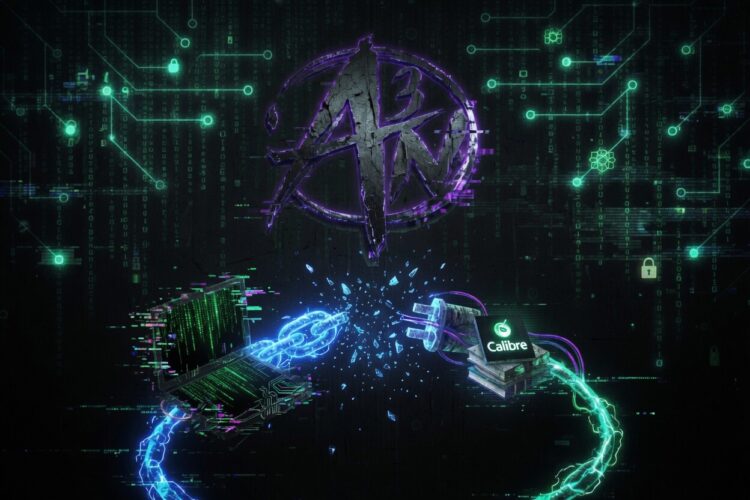
I’ve tested two open source tools that let you opt out of the surveillance economy and build your own infrastructure. One is a terabyte-sized fire hose of offline knowledge—Wikipedia, Khan Academy, medical references, maps, and optional local AI. The other is a quiet, essential tool for anyone who remembers when buying a book actually meant owning it.
Neither requires a subscription. Neither phones home. Neither asks permission.
If you’re already running Linux, you can have both up in an afternoon. If not, the hardware section will point you toward used mini PCs that cost less than a nice dinner out and sip power like a digital watch.
The state wants you dependent, docile, and disconnected from anything it doesn’t approve. Agorism says: build your own internet. Start here.
Let’s get to work.
Project N.O.M.A.D. (Node for Offline Media, Archives, and Data)
Libreville’s Freedom Rating: ★★★★★
Platform: Ubuntu 26.04 · Open Source (Apache 2.0 license)
Homepage: https://www.projectnomad.us/
Everything else: Active Discord, responsive GitHub, and YouTube.
TL;DR: Project N.O.M.A.D. — A Practical Agorist Solution
Off-grid node: Run NOMAD on a solar-powered mini PC in a cabin or RV. Local WiFi, no cell signal needed—untraceable, unenforceable.
Community resilience: Deploy NOMAD in a neighborhood via mesh networking. When the internet fails (hurricanes, unrest, state action), your block still has Wikipedia, medical guides, and offline maps—mutual aid in action.
Prepper’s library (without paywalls): Preppers charge hundreds for locked-down hardware. NOMAD is free, runs on any x86 device, and includes optional GPU-accelerated AI, full Khan Academy, and custom OpenStreetMap regions. The state can’t tax what you build yourself.
Unsanctioned education: Homeschoolers, study groups, and remote communities can run a full K-12 curriculum offline—no government approval, no licensing fees, no district censorship.
Blackout-proof knowledge: Internet outages last hours; bureaucratic takedowns last forever. NOMAD makes your knowledge state-proof.
Mail interception: State intelligence services regularly intercept or alter mailed hardware with a variety of dirty tricks.
Full Review:
Project NOMAD is a free, open-source offline knowledge hub that runs on your own x86 hardware. It gives you Wikipedia, maps, Khan Academy, and optional local AI — no internet required. It runs in a Docker container and serves everything over your local network.
Who this is for: Emergency preppers, off-grid folks, tech enthusiasts who want to own their data, and anyone doing unsanctioned education.
How-to: Installation takes just two commands. The dashboard is clean and the content explorer is responsive. The Easy Setup wizard handles everything.
Drawbacks:
It defaults to port 8080 (easy to change). Docker also likes to eat root partition space — plan on a dedicated drive for anything over 500GB.
Hardware Notes:
My Ryzen 7 with 16GB RAM ran it flawlessly without AI. You can start small on existing hardware or go all-in.
Budget builds and sweet spot configs are listed on the site (I left them as-is since they were already decent).
The Agorist Case for NOMAD
The technocratic state controls information by owning the pipes. NOMAD flips the script. Host your own Wikipedia, maps, and educational content locally and you become ungovernable in the realm of knowledge.
Electricity and internet may soon come with compliance strings attached. When that day comes, mesh nets and local nodes like NOMAD may be the only way to stay connected to real information.
Install it. Then deploy it on a solar-powered mini PC — in a van, cabin, or sailboat.
This isn’t just software. It’s praxis.
Calibre E-Book Manager with Content Server
Libreville’s Freedom Rating: ★★★★☆ – Powerful, essential, and deeply unpolished. One star deducted for the folder structure.
Platform: Cross-platform (Windows, macOS, Linux) · Open Source (GPL)
Homepage: https://calibre-ebook.com/
TL;DR: Calibre – Self-Host Your Ebook Library, Escape the Walled Garden
Own your books: When Amazon started revoking downloaded Kindle books in 2025, the need for a personal offline archive became obvious. Calibre + DeDRM tools is the answer.
Offline access anywhere: Turn your library into a web-accessible catalog. Load books while connected, read them on a plane.
No corporate surveillance: Amazon tracks what you read and how long you linger. Calibre doesn’t.
Unsanctioned archiving: Preserve books that institutions want memory-holed.
Format liberation: Convert between EPUB, MOBI, PDF, AZW3 and everything else.
Full Review:
Calibre has been the king of ebook management for nearly two decades. It organizes, converts, edits, and serves your collection. The built-in Content Server lets you access everything from any browser on your network.
How-to: Easy installer. Start the Content Server from the Connect/Share menu. Change the port to 8081 if you’re also running NOMAD.
Drawbacks:
The internal folder structure is a mess if you like manual file management. Keep large libraries under ~50k books or search slows down. Best kept on LAN for security.
Hardware: Runs on anything. Storage is the only real limit.
The Agorist Case for Calibre
In the age of AI scraping everything for “training data,” the old arguments for intellectual property look increasingly like state-sanctioned rent-seeking. Grab those big ebook packs from your favorite torrent site. Build your library. Share An Agorist Primer with the neighborhood kids over meshnet along with some dice.
Final verdict: Calibre is still the best tool for the job. Pair it with Calibre-Web for a nicer interface if you want. It’s enough.

TechLibre
Tom ‘TechLibre’ is an expat and who grew up in the Rocky Mountain West and now lives in Peru. He’s worked in fields as diverse as ranching, haute cuisine, and teaching applied linguistics. He’s a plain old Anarchist who got into the lifestyle through 80’s Punk Rock and somehow managed to survive long enough to help raise the next generation of freeborn people.